
Nov . 27, 2025 06:05 Back to list
Durable and Eco-Friendly gfrg Access Panel Solutions for Modern Buildings
Why the gfrg Access Panel Matters in Today’s Built Environment
If you've been anywhere near modern construction or renovation projects lately, chances are you've encountered a gfrg access panel or at least heard about it in passing. But why should it matter globally? Well, in essence, these access panels offer a sleek, durable, and often more sustainable gateway to hidden utilities and infrastructure in walls and ceilings. Whether it’s in skyscrapers in Dubai or hospitals in Europe, the gfrg access panel is quietly solving big challenges — like easy maintenance, fire safety, and aesthetic integration — while supporting industry-wide moves toward greener, smarter buildings.
Understanding how these panels work, and why they are becoming indispensable, can help architects, contractors, and facility managers make smarter, future-proof choices. Plus, it sheds light on a surprisingly interesting slice of modern industrial design where composites and functionality meet.
Global Context: Its Rising Role in Sustainable Infrastructure
Globally, the construction sector consumes roughly 40% of energy and a similar percentage of raw materials (source: ISO). As urban populations swell—especially in Asia and Africa—there’s increasing pressure on buildings to not just stand the test of time, but to do so resource-efficiently. Enter the gfrg access panel: with its glass fiber reinforced gypsum (GFRG) base, this panel is tougher than your average drywall but far lighter and eco-friendlier than bricks or steel access hatches.
Many developing countries, where rapid but cost-conscious urbanization is happening fastest, are adopting this tech to reduce construction waste and facilitate safer, easier building maintenance. Oddly enough, they solve a surprisingly mundane but critical issue — access to air conditioning ducts, electrical wiring, and plumbing — without compromising design or safety regulations.
What Exactly Is a gfrg Access Panel?
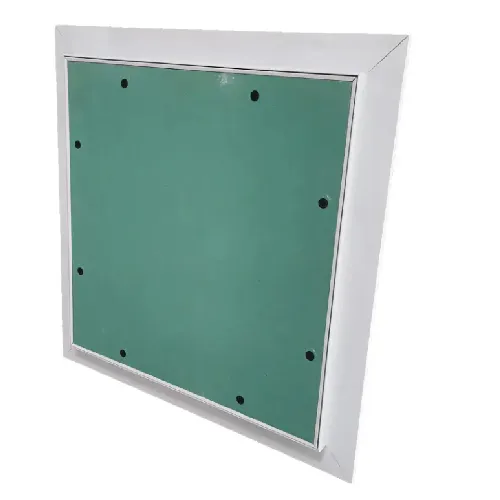
Simply put, a gfrg access panel is a modular opening, embedded within ceilings or walls, crafted primarily from glass fiber reinforced gypsum. This composite blends gypsum—a natural mineral—with glass fibers, creating panels that resist fire, moisture, and mechanical wear far better than ordinary plasterboard. Unlike metal or plastic panels, these blend almost invisibly with building interiors thanks to their compatibility with paints and finishes.
They have become an industry favorite because they fit the niche traditionally occupied by metal access panels but deliver a silent promise of durability, ease of installation, and insulation. For humanitarian projects too, they’re a boon — easy to ship, install, and maintain, especially when skilled labor is scarce.
Core Features of gfrg Access Panels
1. Durability & Fire Resistance
The intrinsic gypsum content gives these panels fire-resistant properties that meet or exceed many building codes worldwide. Many engineers I’ve spoken with emphasize this as a deal breaker in hospitals or schools where fire safety is paramount.
2. Lightweight Yet Strong
Compared to metal or wooden alternatives, the glass fiber matrix drastically reduces weight without compromising strength. This not only simplifies installation but also reduces structural load — a boon in multi-story buildings aiming for longevity.
3. Cost Efficiency Over Lifecycle
It’s easy to get distracted by up-front costs, but a gfrg access panel’s affordability shines when you factor in installation speed, maintenance savings, and reduced need for replacements. I’ve seen estimates that lifecycle costs can be reduced by up to 20% in commercial settings.
4. Aesthetic Integration
These panels blend seamlessly into plaster ceilings or walls, avoiding the industrial “patch” look metal panels sometimes leave. This is important in offices or luxury apartments where design integrity counts.
5. Environmental Benefits
Gypsum is recyclable and much more abundant and less energy-intensive to produce than metals. Many builders cite this as another big reason for switching, aligning with green building certifications like LEED.
Real-World Uses for the gfrg Access Panel
From sandy deserts to rainy tropics, the gfrg access panel is proving useful. Consider:
- Healthcare Facilities: quick access to HVAC and medical gas lines means faster maintenance downtime, a life-saver in emergencies.
- Commercial Complexes: easier mechanical inspections without disrupting daily business.
- Disaster Relief Structures: I found reports of NGOS deploying modular gfrg panels in temporary clinics where speed and durability were key.
- Industrial Zones: harsh environments demand resistant but lightweight solutions — GFRG panels fit the bill.
- Residential Constructions: home builders select these for their innocuous looks and longevity.
Regions such as Southeast Asia and parts of the Middle East are investing heavily in infrastructure that includes gfrg panels as part of their drive for sustainable, resilient urban environments.
Product Specifications at a Glance
| Specification | Typical Value | Remarks |
|---|---|---|
| Material | Glass Fiber Reinforced Gypsum | Composite for strength & fire resistance |
| Fire Rating | Up to 2 hours (varies by model) | Meets several international standards |
| Weight per m² | 8-10 kg | Lightweight compared to metal panels |
| Finish | Paintable, Smooth surface | Allows aesthetic blending |
| Dimensions | Standard sizes from 300x300 mm to 600x600 mm | Custom sizes available on request |
Choosing Your Supplier: How Vendors Stack Up
Not all gfrg access panels are created equal. I spent some time comparing three top vendors to see what really sets them apart:
| Feature | Vendor A (Asia) | Vendor B (Europe) | Vendor C (Middle East) |
|---|---|---|---|
| Fire Rating | 1.5 hours | 2 hours | 1 hour |
| Customization | Standard sizes only | Full custom orders | Limited custom sizing |
| Lead Time | 2 weeks | 3-4 weeks | 1 week |
| Price Range | Affordable | Premium | Mid-range |
| Sustainability Certifications | ISO 14001 | ISO 14001 & LEED | None |
Advantages & Long-Term Value of gfrg Access Panels
Frankly, these panels offer more than just a practical access point. They blend logic—cost, fire safety, longevity—and emotion: peace of mind, improved aesthetics, and trust in the building’s integrity. Their sustainability credentials also contribute to social value; they support green constructions that communities are increasingly proud of.
For facility managers, the promise of ease—less fuss for upkeep, fewer disruptions—translates to significant time and money savings. And there’s the safety angle: by ensuring reliable access to pipes and wiring, they help protect occupants and first responders alike.
What Does the Future Hold?
The future for gfrg access panels feels bright. Innovations are underway to embed smart sensors into panels for real-time monitoring of humidity or structural integrity. This automation could revolutionize building maintenance.
Also, as green building regulations tighten worldwide, new bio-based reinforcements might replace glass fibers, further shrinking the environmental footprint. And digital fabrication methods may soon make custom panels more accessible and affordable, fulfilling more complex architectural visions.
Challenges & How the Industry Is Overcoming Them
Like any material, GFRG access panels aren’t without issues. Susceptibility to water damage if poorly installed is common, and sometimes mechanical strength isn’t quite enough for heavy-use areas. However, innovation in coatings and hybrid composites is helping address these limits. Training installers better has also cut down failures. In real terms, manufacturers recommend matched frame designs and routine inspections — we all know preventive care’s the best cure.
FAQ: Your Top Questions On gfrg Access Panel
- Q: How does a gfrg access panel differ from traditional metal panels?
- A: The gfrg panel is lighter, offers better fire resistance, and integrates more seamlessly with plaster finishes. It’s easier to install and has superior thermal and acoustic properties compared to metal.
- Q: Can these panels be customized to unusual sizes or shapes?
- A: Yes, many suppliers offer custom dimensions, though lead times and costs may increase. Customized panels help meet unique architectural requirements or retrofit older buildings.
- Q: How sustainable is the gfrg access panel compared to alternatives?
- A: Quite sustainable. Glass fiber reinforced gypsum uses abundant raw materials with lower embodied energy than metals. Plus, many panels are recyclable or reusable.
- Q: Are gfrg access panels suitable for outdoor use?
- A: Generally no, due to gypsum’s susceptibility to prolonged moisture exposure. There are specialized outdoor-rated products, but standard panels perform best indoors.
- Q: How easy is maintenance once installed?
- A: Maintenance is straightforward — their design allows quick opening for inspections. Durability minimizes replacement frequency, reducing long-term upkeep efforts.
Wrapping Up: Why You Should Consider This Solution Now
In the end, the gfrg access panel isn’t just another construction accessory. It represents a shift toward informed building design, balancing form, function, and responsibility. Whether you’re spec’ing a commercial project or upgrading existing infrastructure, these panels can save money, time, and headaches — and do so while supporting a sustainable future.
If you want to explore options or learn more technical details, take a peek at gfrg access panel vendors who lead the market in innovation and reliability. It’s honestly a small change that can make a huge difference.
Quick Takeaway:
The humble gfrg access panel combines modern composite engineering with practical building needs — a modest innovation with outsized benefits going forward.
References
-
Benefits and Guide of Mineral Fiber Ceiling Board for InteriorsNewsApr.16,2026
-
Modern Mineral Fiber Ceiling Solutions for Acoustic PerformanceNewsApr.09,2026
-
Mineral Fibre Board Ceiling vs Gypsum Board A Comprehensive Comparison GuideNewsApr.07,2026
-
Comprehensive Guide to Mineral Fiber Ceiling Specification and PerformanceNewsApr.04,2026
-
What Are Mineral Fiber Ceiling Tiles Made Of And Their ApplicationsNewsMar.31,2026
-
Exploring the Benefits of Suspended Mineral Fibre Ceiling Systems for Modern BuildingsNewsMar.28,2026