
Nov . 28, 2025 22:30 Back to list
Essential Guide to 30x30 Ceiling Access Panels: Specifications, Applications & Trends
Understanding the 30x30 Ceiling Access Panel: Why Size and Simplicity Matter Globally
At first glance, a 30x30 ceiling access panel might seem like just another mundane building component — a square hole with a cover in your ceiling. But peel back that simplicity, and you find an unassuming hero in the worlds of construction, maintenance, and safety. From commercial offices in New York to hospitals in Nairobi, these access panels keep essential services reachable, while maintaining aesthetic appeal and fire safety standards.
Globally, as urban centers expand and infrastructure ages, the need for standardized, reliable ceiling access becomes not only practical but critical. Access panels like the 30x30 (inches or centimeters, depending on context) enable technicians to maintain wiring, HVAC ducts, and sprinkler systems with ease — minimizing downtime and disruption. More importantly, they uphold safety regulations that, according to the International Organization for Standardization (ISO), reduce workplace hazards significantly (1).
So, why should building managers, architects, and even disaster relief coordinators care about this small but mighty product? Because access panels represent efficiency, safety, and a future-proof design approach that’s becoming standard in construction worldwide.
The Global Context: Why 30x30 Ceiling Access Panels Have Gained Importance
Around the world, buildings are becoming smarter, taller, and more complex. According to the UN’s World Urbanization Prospects, by 2050, nearly 68% of the global population will live in urban areas (2). That’s a staggering density of buildings and infrastructure where maintenance access points can't be afterthoughts.
Construction regulations in many countries increasingly call for standardized access panels for fire safety inspections, air duct servicing, and electrical system maintenance. Yet, a conundrum persists: How to balance secure, unobtrusive access with easy operability? The 30x30 ceiling access panel size hits a sweet spot — large enough to reach confined spaces yet small enough not to disrupt ceiling aesthetics or structural integrity.
This size also aligns well with modular construction trends, an approach promoted by the International Federation of Consulting Engineers (FIDIC), which advocates reducing site-build complexity and speeding up project delivery (3). The result: these panels facilitate quick inspections and repairs, cutting costs and risk.
What Exactly Is a 30x30 Ceiling Access Panel?
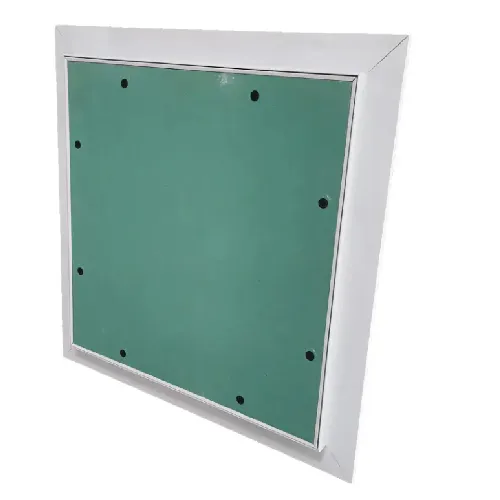
Simply put, a 30x30 ceiling access panel is a removable section — usually square and measuring roughly 30 by 30 centimeters or inches — installed into a ceiling to provide convenient entry to concealed spaces above: think plumbing systems, HVAC networks, electrical wiring, or fire protection pipes.
It’s a kind of maintenance hatch but designed with careful consideration for load bearing, fire resistance, and aesthetic integration. Unlike irregular or oversized openings, the standardized 30x30 size simplifies planning and product sourcing worldwide — making it a universal “language” of sorts in building construction.
In humanitarian contexts, such as temporary clinics or relief shelters, installing standardized access panels can mean the difference between immediate maintenance and catastrophic system failure, especially where skilled labor and materials are limited.
Core Components and Key Features of Modern 30x30 Access Panels
1. Durability and Material Quality
Most panels are crafted from galvanized steel or aluminum, offering resistance to rust and corrosion. This is vital in humid climates or industrial settings, where moisture or chemicals could shorten their lifespan. Glass-reinforced plastic options exist for lightweight applications, particularly in hospitals or clean rooms.
2. Fire-Rated and Safety Compliance
A significant factor is the panel’s fire resistance rating. Certified panels can slow fire spread through ceilings, buying precious time during emergencies — a true lifesaver endorsed by safety codes in Europe and North America.
3. Security and Ease of Access
Balancing quick maintenance access with preventing unauthorized entry is a delicate art. Many 30x30 access panels feature locking mechanisms or tamper-evident designs, especially in commercial or institutional settings.
4. Aesthetic Versatility
Recessed edges, paintable frames, and minimal profiles let these panels blend seamlessly into ceiling designs — important in places like museums or hotels where appearance matters.
5. Installation Flexibility
Several mounting options exist: screw-fixed, snap-in, or spring-loaded panels cater to different ceiling types — drywall, drop ceilings, plasterboard or metal. This adaptability speeds up installation and reduces labor costs.
Mini Summary:
The 30x30 ceiling access panel’s design touches on durability, safety, security, aesthetics, and installation. Together, they ensure the panel is more than just an opening — it’s an integrated utility hub.
Seeing the 30x30 Ceiling Access Panel in Action: Real-World Applications
From the temperate climates of Europe to humid tropical zones in Southeast Asia, these panels serve multiple industries:
- Healthcare Facilities: Easy access to medical gas lines and ventilation without compromising sterile environments.
- Educational Campuses: Simplify upgrades to wiring and networking infrastructure across sprawling buildings.
- Commercial Offices: Enable fast HVAC duct cleaning and sprinkler inspections — essential for fire safety compliance.
- Disaster Relief: Temporary clinics set up for post-hurricane or earthquake zones use panels to reach critical infrastructure swiftly.
Oddly enough, despite their ubiquity, access panels occasionally get overlooked until an urgent problem arises — leaky pipes or faulty wiring. In remote industrial zones, for example, where every hour counts, the panel’s simplicity hugely reduces downtime and logistical headaches.
Advantages and Long-Term Value of 30x30 Ceiling Access Panels
Pragmatically, these panels reduce service disruption time, lowering operational costs. Emotionally, they provide peace of mind to building occupants knowing maintenance can happen seamlessly—without intrusive, messy ceiling removals.
Environmentally, well-sealed and insulated panels help maintain climate control, contributing to energy efficiency targets. This aligns with global sustainability goals like those from the UN Sustainable Development Goals (SDG 11 for sustainable cities) (4).
And as a building ages, the panels keep assets accessible without costly demolition or reconstruction — a true hallmark of smart design.
What’s New? Future Trends and Innovations
The ceiling access panel sector is quietly evolving. Innovations include:
- Smart Panels: Embedded sensors that detect humidity or unauthorized entry.
- Eco-Friendly Materials: Use of recycled metals and composites to reduce environmental footprint.
- Modular Systems: Panels that integrate with ceiling tiles for ultra-fast retrofits.
- Automation Friendly: Designs facilitating robotic maintenance in smart buildings.
These trends reflect a broader push to digitize building management and promote green construction.
Challenges and How Experts Overcome Them
Challenges include:
- Standardization Issues: Confusion over metric vs. imperial sizing can cause mismatches.
- Installation Complexity: In older buildings, retrofitting can demand custom solutions.
- Durability in Harsh Environments: Chemicals, moisture, or heavy foot traffic can degrade panels.
To address these, manufacturers produce adaptable sizing options, deploy corrosion-resistant coatings, and offer tailored mounting kits. Plus, expert installers are indispensable — a poorly installed panel can wreck the whole utility it was meant to preserve.
Product Specification Table for a Typical 30x30 Ceiling Access Panel
| Specification | Details |
|---|---|
| Panel Size | 30 x 30 inches (standard) / 30 x 30 cm (metric) |
| Material | Powder-coated galvanized steel |
| Fire Rating | Up to 1 hour (UL Certified) |
| Weight | Approximately 3.5 kg (7.7 lbs) |
| Mounting Type | Spring-loaded or screw-fixed options |
| Finish | Paintable matte white or custom colors |
Vendor Comparison Table for 30x30 Ceiling Access Panels
| Vendor | Product Range | Fire Rating | Customization | Price Range (USD) | Lead Time |
|---|---|---|---|---|---|
| CeilingTech Industries | Standard & fire-rated panels | 1 hour (UL) | Limited colors | $45 – $70 | 2-3 weeks |
| AccessPro Solutions | High-end, anti-tamper models | Up to 2 hours | Custom sizes & finishes | $80 – $120 | 4-6 weeks |
| BuildSmart Components | Basic panels, budget-friendly | None | Fixed sizes only | $25 – $40 | 1-2 weeks |
FAQs: What People Usually Ask About 30x30 Ceiling Access Panels
Q1: What dimensions actually define a ‘30x30’ ceiling access panel – inches or centimeters?
A: It depends on the region and manufacturer. In the US and UK, 30x30 typically refers to inches, providing ample space for most maintenance tasks. Elsewhere, 30x30 cm panels exist for compact applications. Always double-check specs before purchase to avoid compatibility issues.
Q2: Can a 30x30 access panel be fire-rated, and how important is that?
Absolutely — many are UL or CE certified to withstand fire for an hour or more. Fire rating is essential in commercial buildings where fire codes demand barrier integrity. It’s not just about safety but also legal compliance.
Q3: Are these panels easy to install on existing ceilings?
Installation can vary. For new builds, they integrate easily with standard ceiling grids. Retrofits in older buildings may need custom framing or cutting, sometimes requiring a professional installer to ensure a flush, safe fit.
Q4: How do access panels impact building energy efficiency?
Well-installed, sealed panels help maintain ceiling insulation and HVAC efficiency. Poorly sealed or loose panels can cause drafts or heat loss, increasing energy bills. So, quality matters.
Q5: Where can I find reliable 30x30 ceiling access panels?
Industry suppliers and specialized manufacturers offer a range of options. Also, check out 30x30 ceiling access panel vendors online for tested, certified, and customizable products.
Final Thoughts: Why the Right Access Panel Makes All the Difference
In real terms, something as simple as a 30x30 ceiling access panel turns out to be a linchpin in building functionality, safety, and longevity. Whether you’re designing a skyscraper, upgrading an office park, or managing a temporary field hospital, these access panels keep the unseen vital systems reachable yet concealed — striking that quiet balance few components achieve.
If you want to explore the latest products or get tailored advice for your project, visit 30x30 ceiling access panel. You might be surprised how much smarter your maintenance routine becomes.
References:
- ISO 21542: Accessibility and usability of the built environment
- United Nations, World Urbanization Prospects, 2018 Revision
- FIDIC, Modular Construction Best Practices, 2020
- UN Sustainable Development Goals, Goal 11: Sustainable Cities and Communities
-
Benefits and Guide of Mineral Fiber Ceiling Board for InteriorsNewsApr.16,2026
-
Modern Mineral Fiber Ceiling Solutions for Acoustic PerformanceNewsApr.09,2026
-
Mineral Fibre Board Ceiling vs Gypsum Board A Comprehensive Comparison GuideNewsApr.07,2026
-
Comprehensive Guide to Mineral Fiber Ceiling Specification and PerformanceNewsApr.04,2026
-
What Are Mineral Fiber Ceiling Tiles Made Of And Their ApplicationsNewsMar.31,2026
-
Exploring the Benefits of Suspended Mineral Fibre Ceiling Systems for Modern BuildingsNewsMar.28,2026