
Dec . 02, 2025 15:46 Back to list
Comprehensive Guide to Access Panel on Ceiling – Benefits, Applications & Innovations
Access Panel on Ceiling: What It Is and Why It Matters
You might have passed beneath numerous ceilings sporting unassuming squares or rectangles — those are access panels on ceilings. Oddly enough, these simple fixtures play a surprisingly crucial role in buildings worldwide. From industrial warehouses to hospitals and even post-disaster shelters, access panels ensure that vital systems like plumbing, wiring, and HVAC units remain reachable without causing major damage or disruption.
Globally, with urbanization soaring (UN reports nearly 68% living in urban areas by 2050), maintaining infrastructure efficiently is essential. Access panels provide a practical and cost-effective solution to building maintenance challenges, which often saves time, cuts costs, and helps improve safety. Understanding their design, applications, and future can benefit engineers, architects, and even humanitarian planners.
Global Context: Why Access Panels Are More Relevant Than Ever
In today's fast-evolving building landscapes—where automation, sustainability, and resilient design are key priorities—access panels have become part of the bigger picture. Data from the International Organization for Standardization (ISO) emphasizes increasing standards for building safety and maintenance, while the World Bank highlights the critical need for infrastructure adaptability, especially in developing urban centers.
Yet, here’s the kicker: many facilities still struggle with invasive maintenance that wastes time and money or compromises structural integrity. Access panels address this problem head-on by offering ready-made, convenient access points built right into ceilings.
Defining the Access Panel on Ceiling
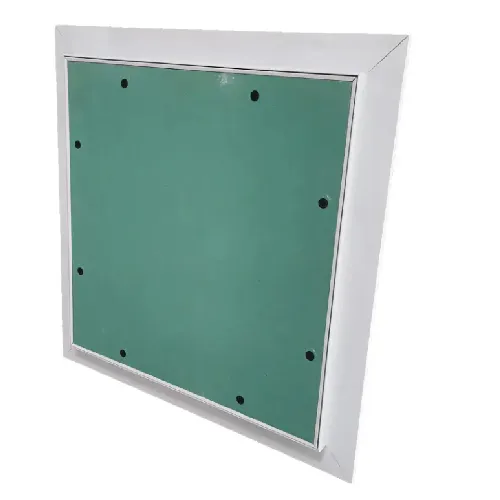
In simple terms, an access panel on ceiling is a framed opening designed into ceiling structures that can be opened — usually via a hinged door or removable cover — to provide entry to concealed utilities or systems. These panels connect users to areas otherwise hidden behind drywall, plaster, or suspended ceilings.
They’re indispensable in modern industry because they balance the need for aesthetic continuity—no ugly holes or exposed pipes—with practical access to mechanical, electrical, and plumbing (MEP) components for inspection, repair, or upgrades. Humanitarian agencies, too, leverage quick-install access panels in temporary shelters, where modularity and rapid deployments are vital.
Key Factors of a Good Access Panel on Ceiling
1. Durability
A ceiling access panel must withstand repeated opening while resisting environmental challenges like moisture or temperature changes. Materials often include galvanized steel, aluminum alloys, or even fire-rated composites for certain applications.
2. Ease of Installation and Use
Quick-install features — like snap-in frames or concealed latches — make maintenance teams’ lives easier. Some models require no tools for access, which is a real plus in tight spaces or hazardous sites.
3. Size and Customizability
Access panels come in standardized sizes but can be custom-fabricated to fit specific ceiling grids or accommodate large equipment. Moreover, they should blend visually with ceiling finishes, whether smooth paint or tiled setups.
4. Security and Safety
In critical environments such as hospitals or data centers, access panels may include locking mechanisms or tamper-proof designs to limit unauthorized interventions. Fire-resistant options also exist for enhanced safety compliance.
5. Cost Efficiency
Balancing upfront costs with lifecycle savings is key. While some premium panels command higher prices, their role in reducing repair times and damage risk offers compelling long-term value.
Inline Product Specification Table
| Feature | Specification | Details |
|---|---|---|
| Material | Galvanized Steel | Corrosion-resistant, suitable for indoor environments |
| Dimensions | 300 x 300 mm (standard) | Also available in custom sizes |
| Finish | Powder Coated White | Blends with typical ceiling tiles |
| Opening Mechanism | Concealed latch with tool-free operation | Easy access, secure closure |
| Fire Rating | Up to 1 hour (optional) | Meets UL 263 standard |
Global Applications & Use Cases
World over, years of experience show that access panels on ceilings feature prominently in numerous sectors:
- Industrial Plants: Easy access to overhead conduits or machinery parts critical for maintenance and safety.
- Commercial Buildings: Streamlined inspections of HVAC systems without disrupting tenant operations.
- Healthcare Facilities: Hygienic panel materials and secure locks to maintain sterile environments.
- Emergency & Humanitarian Shelters: Rapidly deployable panels allow modular setup and ongoing repairs in remote zones.
- Educational & Government Sites: Facilitate easy upgrades to electrical or communication infrastructure under ceilings.
For instance, in post-disaster relief, NGOs rely on access panels integrated into shelters to speedily restore critical utilities — no need for costly ceiling damage each time repair is needed.
Vendor Comparison Table
| Vendor | Material Options | Price Range (USD) | Lead Time | Special Features |
|---|---|---|---|---|
| XY Ceilings | Galvanized Steel, Aluminum | $25 - $50 per panel | 2 weeks | Tool-free access, custom sizing |
| Aqua Panels | Powder Coated Steel, Fire-rated Composite | $40 - $70 per panel | 3-4 weeks | Fire rated, locking mechanism available |
| Modular Access Ltd. | Aluminum, Composite Panels | $30 - $60 per panel | 1 week | Rapid production, eco-friendly materials |
Advantages & Long-Term Value
The benefits of using access panels on ceilings are numerous and well-documented. Practically, they cut costs by minimizing ceiling damage during maintenance—no elaborate ceiling removals or reconstructions. This leads to quicker repairs, less downtime, and reduced labor costs.
On the sustainability front, panels reduce waste by protecting ceiling finishes and materials. Socially, they enhance safety and dignity in sensitive environments such as hospitals or community shelters, where easy maintenance prevents hazards and maintains cleanliness.
Finally, the innovation and trust factors come into play as technologies advance towards smarter panels that integrate sensors or digital locks, enabling secure, monitored access.
Future Trends & Innovations
Looking ahead, the future of ceiling access panels aligns with broader trends in sustainable building and digital transformation. Smart panels using IoT tech promise real-time condition monitoring of behind-ceiling utilities, preempting failures before they happen.
Materials scientists are also developing bio-based composites — lightweight, fire-resistant, and recyclable — decreasing environmental footprints. Automation in installation with modular designs is streamlining custom fitment, reinforcing quick deployment for emergency shelters or industrial expansions.
Challenges & Solutions
Not everything is perfect, of course. Challenges exist, like ensuring standard dimensions fit complex ceiling systems, or maintaining fire safety standards while keeping panels lightweight and affordable.
Experts recommend modular panels with adjustable frames for varied installations, plus ongoing testing to meet updated ISO fire safety regulations. Tool-free but lockable designs address both convenience and security concerns, a balance that many engineers still emphasize.
FAQ: Frequently Asked Questions About Access Panel on Ceiling
- Q: How do I choose the right size for an access panel on my ceiling?
A: It depends on what needs accessing — plumbing, electrical, or HVAC. Standard sizes start around 12x12 inches, but custom sizes are possible. Measure access needs precisely and consider panel placement relative to ceiling tiles or joists. - Q: Are access panels on ceilings fire rated?
A: Yes, many models come with fire ratings (e.g., UL 263) up to one hour. Always check product specs to ensure compliance with local building codes. - Q: Can I install access panels myself?
A: While possible for simple drop-ceiling applications, careful installation is recommended to maintain fire and security certifications. Professionals can ensure panels fit snugly and lock mechanisms work properly. - Q: Do access panels affect ceiling aesthetics?
A: Good-quality panels are designed to blend seamlessly with ceiling finishes. Some have paintable surfaces or tile-insert options to hide their presence.
Conclusion: Why Investing in Access Panels on Ceilings Makes Sense
In the grand scheme of building management and infrastructure maintenance, access panels on ceilings might seem like minor hardware. But they pack a powerful punch in operational efficiency, safety, and sustainable design.
Whether you’re an engineer working in industrial plants, an architect designing a commercial space, or a humanitarian preparing relief shelters, understanding and choosing the right access panel solution can save time, money, and headaches down the road.
For those eager to explore how quality access panels can fit your needs, don’t hesitate to access panel on ceiling resources and vendor options. It’s a small upgrade with big impact.
Oddly enough, paying attention to these modest ceiling squares might just improve how you maintain your entire structure.
References:
-
Benefits and Guide of Mineral Fiber Ceiling Board for InteriorsNewsApr.16,2026
-
Modern Mineral Fiber Ceiling Solutions for Acoustic PerformanceNewsApr.09,2026
-
Mineral Fibre Board Ceiling vs Gypsum Board A Comprehensive Comparison GuideNewsApr.07,2026
-
Comprehensive Guide to Mineral Fiber Ceiling Specification and PerformanceNewsApr.04,2026
-
What Are Mineral Fiber Ceiling Tiles Made Of And Their ApplicationsNewsMar.31,2026
-
Exploring the Benefits of Suspended Mineral Fibre Ceiling Systems for Modern BuildingsNewsMar.28,2026