get a quote

Selecting the right overhead system often comes down to a critical balance between acoustic performance, safety regulations, and aesthetic flexibility. For commercial architects and facility managers, the challenge is no longer just about covering a ceiling, but about optimizing the environment for productivity and safety.
The global shift toward sustainable and high-performance building materials has placed a spotlight on the technical capabilities of modern mineral and gypsum composites. From noise attenuation to fire propagation resistance, the specifications provided by false ceiling tiles manufacturers now dictate the operational efficiency of modern office and industrial spaces.
This analysis explores the technical drivers behind contemporary ceiling selection, examining how material science transforms a simple building component into a functional tool for acoustic control and fire protection.


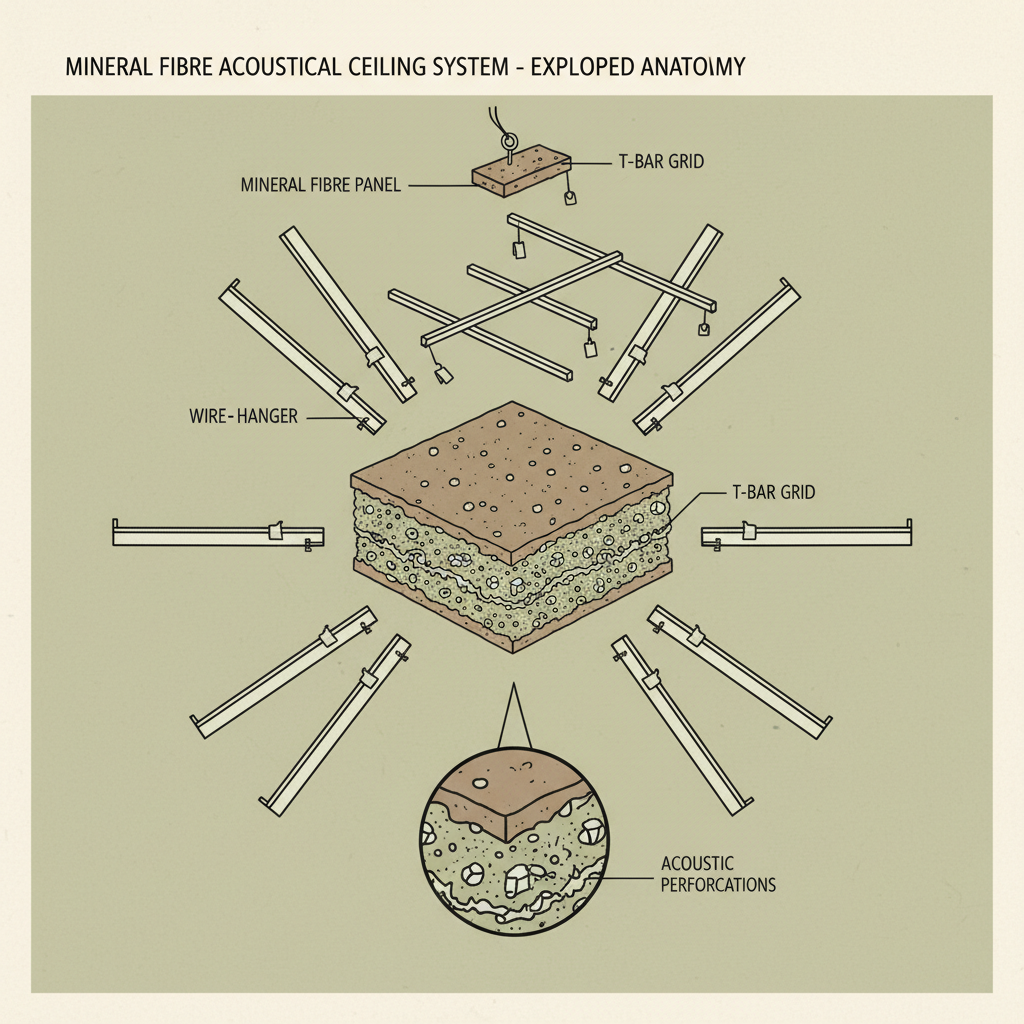
The transition from heavy plaster and wood to mineral fiber and PVC gypsum represents a significant leap in construction efficiency. These materials are engineered to be lightweight yet structurally stable, allowing for rapid installation via T-grid systems while providing superior environmental control.
Modern production involves integrating non-combustible mineral wool as a primary raw material, which transforms the ceiling from a passive cover into an active safety barrier. This shift has allowed manufacturers to specialize in multi-functional boards that simultaneously address thermal insulation and moisture resistance.
Understanding the difference between sound reduction and sound absorption is vital for any architectural specification. Sound reduction focuses on isolating noise—preventing it from traveling from one floor to another—while absorption focuses on the quality of sound within the room itself.
Mineral fiber boards utilize a specialized porous architecture. The small holes on the surface are designed to trap sound waves, reducing the reflection of sound off the ceiling. This prevents the "echo chamber" effect common in large open-plan offices or industrial halls.
By adjusting the reverberation time, these materials effectively control the auditory environment. This is achieved through a combination of material density and surface perforation, ensuring that speech remains clear while background noise is significantly muted.
Fire protection is a non-negotiable requirement in commercial construction. The selection of non-combustible raw materials ensures that the ceiling does not contribute to the fuel load of a building during a fire event.
The use of mineral wool as a primary component ensures that ceiling boards are inherently non-combustible, acting as a critical barrier that prevents the rapid spread of fire across the ceiling plane.
Beyond simple non-combustibility, these materials are often treated to resist mildew and bacteria, ensuring that the indoor air quality remains high even in humid environments. This integration of safety and hygiene makes mineral fiber an ideal choice for healthcare and educational facilities.
When evaluating different ceiling materials, procurement teams typically look at a relative index of performance. Factors such as Noise Reduction Coefficient (NRC), fire rating, and installation speed are weighed against the total cost of ownership.
The following illustrative model compares the relative effectiveness of common ceiling types across key performance dimensions to assist in the initial screening process.
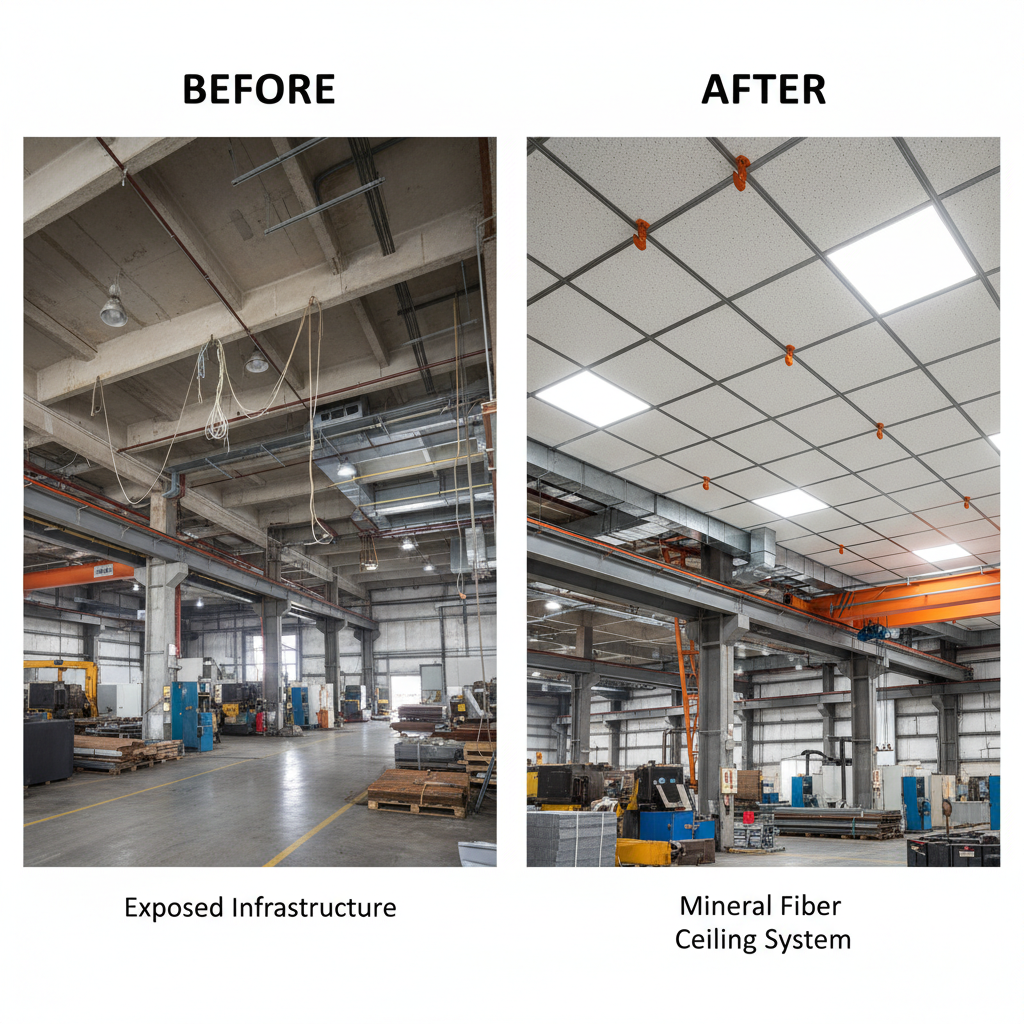
In a typical industrial setting, such as a manufacturing plant or a large warehouse, the priority is often noise reduction and ease of maintenance. The use of ceiling grids and inspection panels allows facility managers to access overhead utilities without destroying the ceiling structure.
Conversely, in high-traffic corporate lobbies, the emphasis shifts toward decoration and a refined finish. Mineral fiber boards can be printed with various patterns or surface treatments, allowing the ceiling to serve as a decorative element while maintaining its functional acoustic properties.
The industry is moving toward "smart" ceilings that integrate lighting, HVAC, and sensor technology within the ceiling grid. This requires a higher degree of precision from false ceiling tiles manufacturers to ensure that tiles can accommodate these integrations without losing structural integrity.
Environmental sustainability is also driving a shift toward recycled mineral content. The goal is to reduce the carbon footprint of the manufacturing process while maintaining the non-combustible nature of the final product.
Future demands will likely focus on adaptive acoustics—ceilings that can be adjusted or replaced in zones to suit changing room uses, emphasizing the importance of modular T-grid systems over fixed installations.
Procuring ceiling systems requires a systematic evaluation of trade-offs. For instance, a material with extreme sound absorption may be more porous and therefore harder to clean in a sterile environment like a hospital.
Decision-makers must balance the initial material cost against the long-term benefits of reduced energy consumption (via heat insulation) and lowered maintenance costs (via durable PVC or mineral coatings).
The following framework provides a comparative view of common technical considerations when choosing between different ceiling solutions.
| Material Type | Acoustic Priority | Fire Resistance | Primary Use Case |
|---|---|---|---|
| Mineral Fiber | High Absorption | Non-combustible | Offices / Schools |
| PVC Gypsum | Moderate | Fire retardant | Residential / Damp areas |
| Metal Tiles | Low (Reflection) | High | Cleanrooms / Labs |
| Standard Plaster | Very Low | Variable | Traditional Decor |
| Wood Fiber | High Absorption | Treated | Auditoriums / Studios |
| Hybrid Composites | Customizable | High | Mixed-use Commercial |
Sound absorption refers to the ability of a material, such as mineral fiber, to trap sound waves and prevent them from bouncing back into the room, which reduces echo. Noise reduction (or sound insulation) refers to the material's ability to stop sound from passing through the ceiling to the floor above or below. High-quality tiles from professional manufacturers often aim to balance both by using a porous surface for absorption and a dense core for reduction.
Mineral wool is inherently non-combustible. Unlike organic materials or some plastics, it does not ignite and does not release toxic smoke when exposed to high temperatures. This makes mineral fiber boards an ideal fireproof ceiling material, as they can effectively slow the spread of fire across a ceiling plane, providing critical extra time for building evacuation and emergency response.
The choice depends on the environment. Mineral fiber is superior for acoustic control and fire safety, making it best for offices, schools, and commercial halls. PVC Gypsum is often more moisture-resistant and provides a smoother decorative finish, making it more suitable for bathrooms, kitchens, or residential areas where sound absorption is less critical than humidity resistance and aesthetics.
T-grid systems offer unmatched flexibility. They allow for "drop-in" installation and easy removal of individual tiles. This is essential for accessing electrical wiring, plumbing, and HVAC ducts located in the plenum space. Additionally, if a single tile is damaged or stained, it can be replaced individually without the need to tear down and repaint the entire ceiling section.
Yes. Modern manufacturing allows for diverse surface treatments. Mineral fiber boards can be printed with various patterns, textures, or colors. Because they can be cut to size and fit into various grid configurations, they provide a way to achieve a professional architectural look while retaining the technical benefits of sound absorption and fire protection.
Yes, mineral fiber and gypsum boards provide an additional layer of thermal resistance. By creating an air gap between the structural ceiling and the false ceiling, these materials help reduce heat transfer. This can lead to lower energy costs for cooling in the summer and heating in the winter, improving the overall energy efficiency of the building.
The selection of a ceiling system is a strategic decision that impacts everything from employee productivity to occupant safety. By prioritizing materials like non-combustible mineral fiber and versatile PVC gypsum, developers can ensure their spaces meet rigorous safety standards while providing a comfortable acoustic environment.
As the industry moves toward greater integration of smart technology and sustainable materials, the role of specialized manufacturers becomes even more critical. Investing in high-performance ceiling solutions is not merely an aesthetic choice, but a commitment to long-term operational excellence and safety.