
123-67
0%

Table of Contents

Honestly, the mineral fibre acoustical suspended ceiling system market is… well, it’s busier than I’ve seen it in twenty years. Everyone’s chasing better acoustics, more sustainable materials, and faster install times. It’s a race, really. You see a lot of new players popping up, claiming to have the magic formula. Most of 'em don't last. It's not about the fancy marketing, it's about what happens when the guys actually use the stuff.

I’ve been on enough sites to know that a beautiful spec sheet doesn’t mean squat if the tiles are brittle and crumble when you look at ‘em wrong. And the weight! You wouldn't believe how many designs I've seen that look good on paper but are just impossible for a single guy to lift and install overhead. Have you noticed that? Designers… they just don't think about the practicalities sometimes.

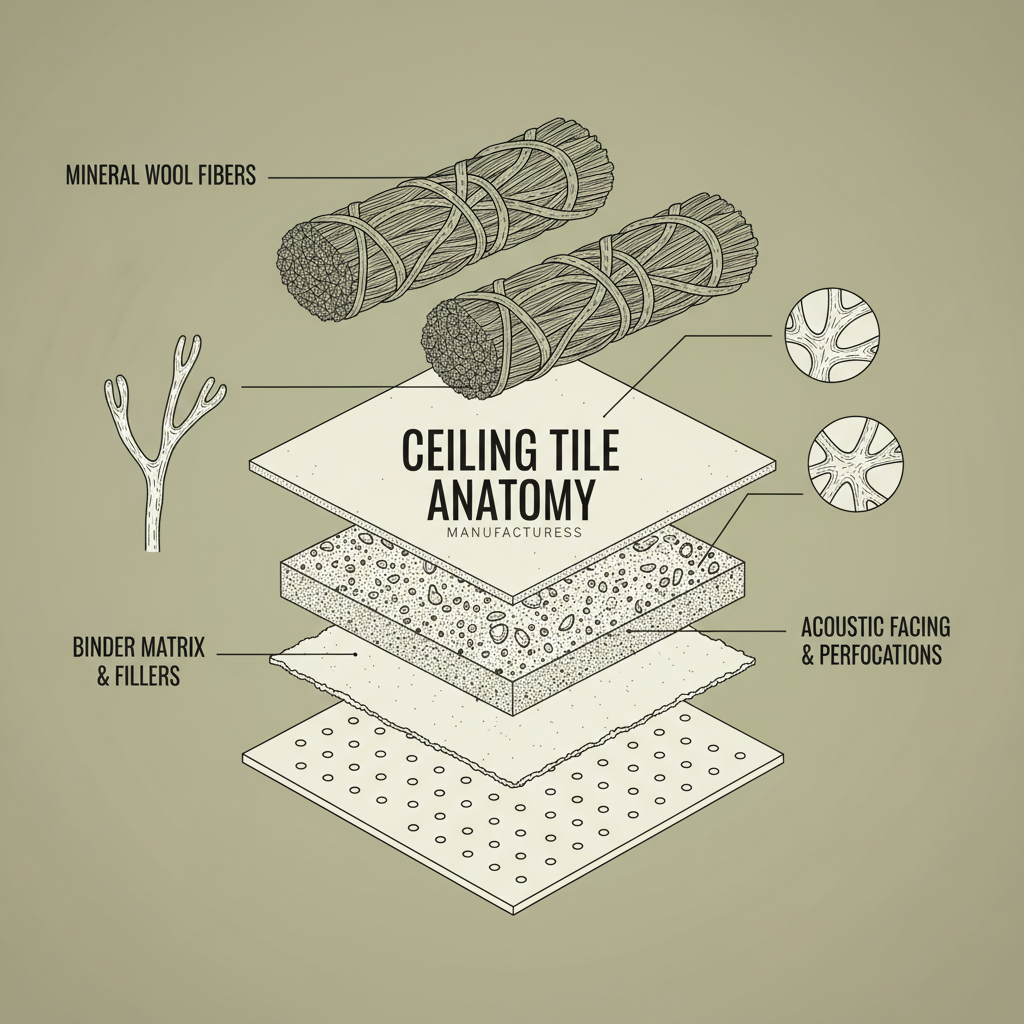
It all comes down to the mineral wool itself, of course. It’s mostly slag wool these days, recycled stuff from steel mills. Smells a bit sulfuric when you first open a pack, kinda like burnt matches, but you get used to it. It's surprisingly soft though, almost like cotton wool, but much denser. You gotta wear a mask when cutting it, naturally. That dust gets everywhere. Strangely, the quality varies so much depending on the mill. I encountered a bad batch from a factory in Jiangsu province last time. They skimped on the binder, and the tiles were falling apart. Nightmare.
Navigating the Complexities of Mineral Fibre Acoustical Suspended Ceiling System Selection

Industry Trends and Design Pitfalls

Navigating the Complexities of Mineral Fibre Acoustical Suspended Ceiling System Selection

The big push right now is obviously sustainability. Everyone wants tiles with higher recycled content and lower VOC emissions. Makes sense. But what I’m seeing is a lot of manufacturers sacrificing performance to get those numbers up. They’ll use cheaper binders or less dense wool, and the acoustic performance just tanks. To be honest, it’s frustrating.

And the designs...don't even get me started. All these fancy geometric patterns and weird edge details look great in renderings, but they add so much complexity to the installation. More cuts, more waste, more time on the clock. Later…forget it, I won’t mention it.

Materials and Handling

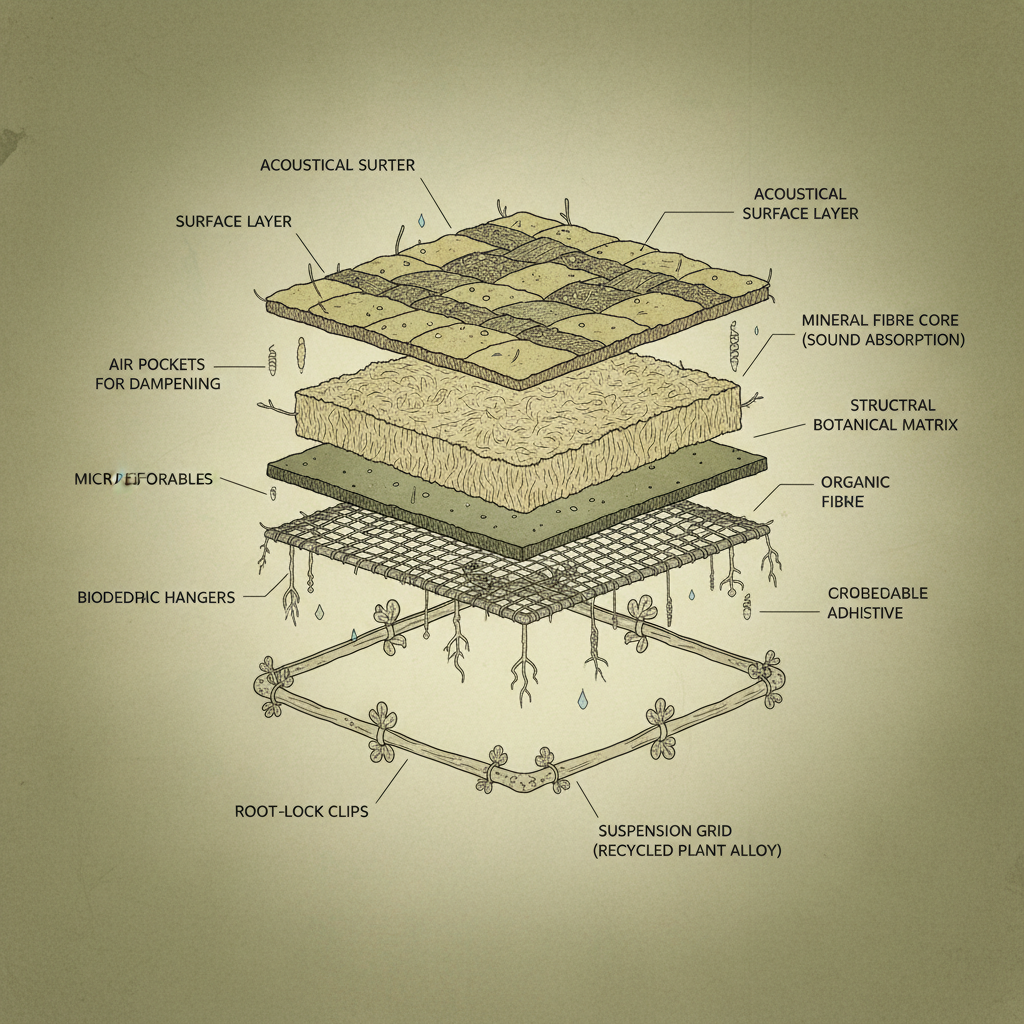
Beyond the mineral wool, the facing is crucial. Paper-faced tiles are the most common – usually a thin kraft paper, sometimes with a coating for moisture resistance. It’s okay, but it tears easily if you’re not careful. Then there are the fiberglass-reinforced tiles. Stronger, more durable, but they're a pain to cut. The fiberglass dust gets absolutely everywhere. I saw a crew spend a whole day cleaning up after cutting those things once. You've gotta use a proper HEPA filter vacuum, not just a shop vac.

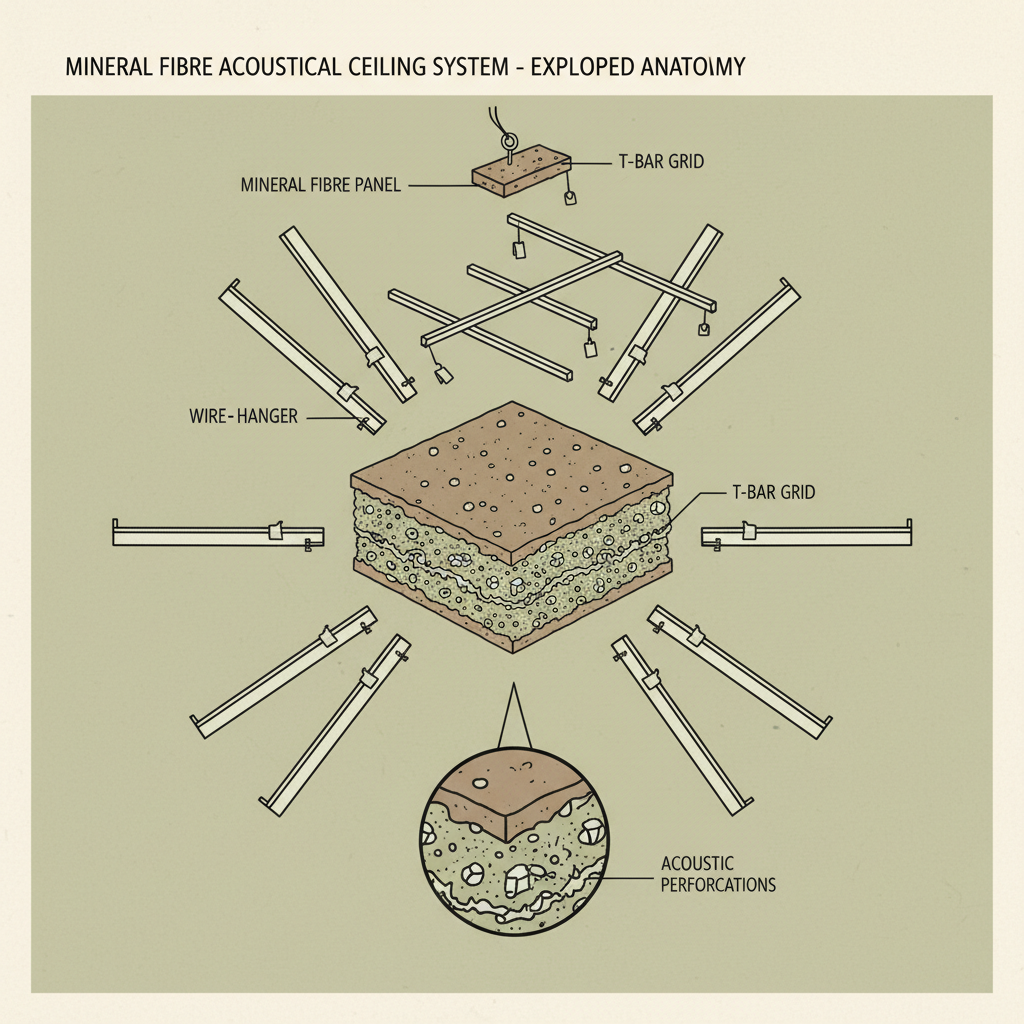
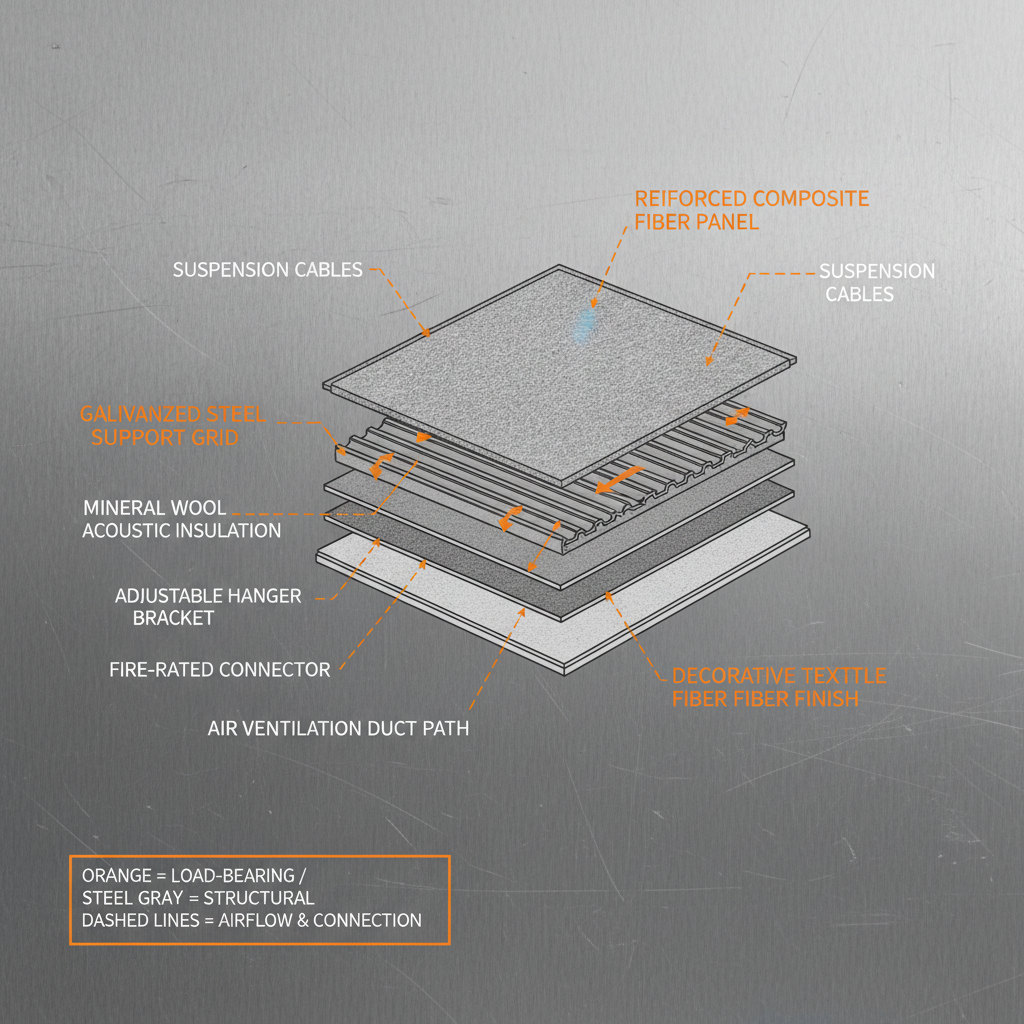
The grid system is just as important. Most are made of galvanized steel, but the quality of the galvanization varies wildly. Cheaper grids will rust if exposed to moisture, and then you’ve got a whole other mess on your hands. And the hangers? Don’t even think about using the flimsy ones. They’ll sag over time, and the whole ceiling will look like a wave.

Anyway, I think a good rule of thumb is, if it feels cheap in the box, it is cheap. Trust your gut.

Real-World Testing Protocols

Lab testing is fine, I guess, but it doesn't tell you much about how a ceiling will actually perform. We do our own testing on site. Drop a tool, see if it dents. Spill some water, see how long it takes to absorb. Bang on it, see if it feels solid. Simple stuff, but it gives you a much better idea of the real-world durability.

Acoustic testing is a bit more complicated. We use a sound level meter to measure the noise reduction coefficient (NRC). But honestly, that number doesn’t always correlate with how quiet the room feels. You really need to listen. I’ve been in rooms with a high NRC that still sound echoey and unpleasant.

Fire testing is obviously critical. We look for tiles that meet the ASTM E84 standards for surface burning characteristics. But again, it's not just about the rating. It's about how the material behaves when exposed to flame. Does it char and form a protective layer, or does it melt and drip? That makes a big difference.

Practical Application and User Habits

You'd be surprised how often people try to use the wrong tools to cut these tiles. Utility knives, serrated knives, even scissors! You need a sharp, fine-toothed saw, or a dedicated ceiling tile cutter. Otherwise, you’ll end up with jagged edges and a mess.

And the installation… people often skip the proper alignment. A slightly misaligned grid can throw off the whole look of the ceiling. It seems like a small detail, but it makes a huge difference.

Mineral Fibre Acoustical Suspended Ceiling System Installation Error Rates


Advantages, Disadvantages, and Customization

The biggest advantage of mineral fibre tiles is, undoubtedly, their acoustic performance. They absorb sound really well, which is crucial in offices, schools, and hospitals. They're also relatively inexpensive and easy to install. But, they're not waterproof. At all. And they're not great at resisting impact. A stray basketball can easily leave a dent.

Customization is possible, to a degree. You can get tiles in different sizes, colors, and even with custom patterns printed on them. I had a client last year who wanted tiles that matched their company logo. It was a pain to coordinate, but we got it done. They wanted the logo embossed, which added another layer of complexity.

Customer Story: The Interface Incident

Last month, that small boss in Shenzhen who makes smart home devices insisted on changing the interface to for the access panels. Said it was “more modern.” I tried to explain that a simple latch was all they needed, and that messing with electronics near a ceiling was a bad idea. But he wouldn’t listen. He wanted a recessed panel with a port to access the wiring. The result? A short circuit that blew out the lighting in the entire office. Cost him a fortune. He ended up going back to the latch, of course.

I swear, some people just want to make things complicated.

Anyway, I think it's a good reminder that sometimes, the simplest solutions are the best.

Performance Analysis and Key Metrics

The devil's always in the details, right? We track a few key metrics to assess performance – acoustic absorption coefficient (AAC) across different frequencies, fire resistance rating, sag resistance, and even the weight per square meter.

Sag resistance is huge. If the tiles sag, they look terrible and the acoustic performance suffers. We usually aim for a maximum sag of L/240, where L is the span length. It’s a tricky one to measure accurately on site, though.

Ultimately, whether this thing works or not, the worker will know the moment he tightens the screw.

Performance Comparison of Common Mineral Fibre Acoustical Suspended Ceiling System Variants

Variant Type Acoustic Performance (NRC) Installation Complexity (1-5) Cost per Square Meter ($)
Standard Paper-Faced 0.75 2 5.50
Fiberglass Reinforced 0.85 3 7.25
High-Density Mineral Wool 0.90 2 6.80
Moisture-Resistant Paper-Faced 0.70 2 6.00
Bio-Based Mineral Wool 0.80 2.5 8.50
Painted Mineral Fibre 0.78 2 6.30

FAQS

What is the typical lifespan of a mineral fibre acoustical suspended ceiling system?

Typically, a well-installed mineral fibre ceiling system can last 20-30 years, but this heavily depends on environmental factors like humidity and temperature fluctuations. Regular inspections are crucial for identifying any signs of sagging, staining, or damage. The grid system tends to be the first thing to fail – rust is the enemy. I’ve seen systems last much longer in dry, stable environments, and significantly less in high-moisture areas.

How does the NRC rating truly impact noise reduction in a space?

The Noise Reduction Coefficient (NRC) indicates the proportion of sound energy a material absorbs. A higher NRC means better absorption. But it's not the whole story! It’s a single-number rating measured at a few specific frequencies. A ceiling with a high NRC might not absorb low-frequency sounds very well. It's best to look at the Absorption Coefficients across the full frequency spectrum for a more accurate assessment, or better yet, just listen to the room.

What are the best practices for handling and cutting mineral fibre tiles safely?

Wear a dust mask, gloves, and eye protection – always. The fibres are irritating to the skin and lungs. Use a sharp, fine-toothed saw or a dedicated ceiling tile cutter. Cut outdoors or in a well-ventilated area. Vacuum up any dust with a HEPA filter vacuum cleaner. Don’t use a regular shop vac – it’ll just spread the dust around. And be careful not to damage the tiles during handling; they're surprisingly fragile.

Can mineral fibre ceiling tiles be recycled at the end of their lifespan?

Yes, many manufacturers now offer recycling programs for mineral fibre tiles. The tiles are broken down and the mineral wool is reused in new products. However, recycling infrastructure varies by region, so it's important to check with local waste management facilities. The paper facing is also often recyclable. It's a growing area, and we're seeing more emphasis on circularity in the industry.

What causes sagging in mineral fibre suspended ceilings, and how can it be prevented?

Sagging is usually caused by inadequate hanger support, excessive span lengths, or moisture absorption. Ensure hangers are spaced correctly according to the manufacturer’s specifications. Use moisture-resistant tiles in humid environments. Also, check the grid system for any signs of rust or damage, as this can weaken the support structure. Preventative maintenance is key – a quick visual inspection can save a lot of headaches down the road.

Are mineral fibre ceilings suitable for areas prone to high humidity or moisture?

Not without taking precautions. Standard mineral fibre tiles will absorb moisture and sag over time. Opt for moisture-resistant tiles specifically designed for humid environments. Ensure proper ventilation in the space to prevent condensation. A vapor barrier above the ceiling can also help. And even with these measures, regular inspections are essential to identify and address any signs of moisture damage before it becomes a major problem.

Conclusion

So, there you have it. Mineral fibre acoustical suspended ceiling systems are a complex beast, but they’re still the workhorse of the industry for a reason. They’re affordable, effective, and relatively easy to install. But don’t underestimate the importance of proper selection, installation, and maintenance. It's not just about picking the cheapest tile; it’s about building a system that will perform reliably for years to come.

Looking ahead, I think we’ll see more innovation in sustainable materials and smarter designs. The demand for better acoustics and healthier indoor environments will only continue to grow. And ultimately, whether this thing works or not, the worker will know the moment he tightens the screw. If it feels right, looks right, and sounds right, you’re probably on the right track.
Christopher Wilson

Christopher Wilson

Christopher Wilson is a Project Engineer at Xingyuan Decorative Materials, specializing in product development and application. He has a strong engineering background with an emphasis on acoustic performance of building materials. Christopher focuses on refining the manufacturing process of Xingyuan's mineral wool sound-absorbing boards and exploring new product innovations. He
Previous Navigating Challenges with Mineral Fibre Board Ceiling Installations and Performance
Next Exploring Mineral Fiber Ceiling Tiles Manufacturers and Lightweight Ceiling Solutions

If you are interested in our products, you can choose to leave your information here, and we will be in touch with you shortly.